Sewer Pipe Relining: Top 3 Benefits in 2025!
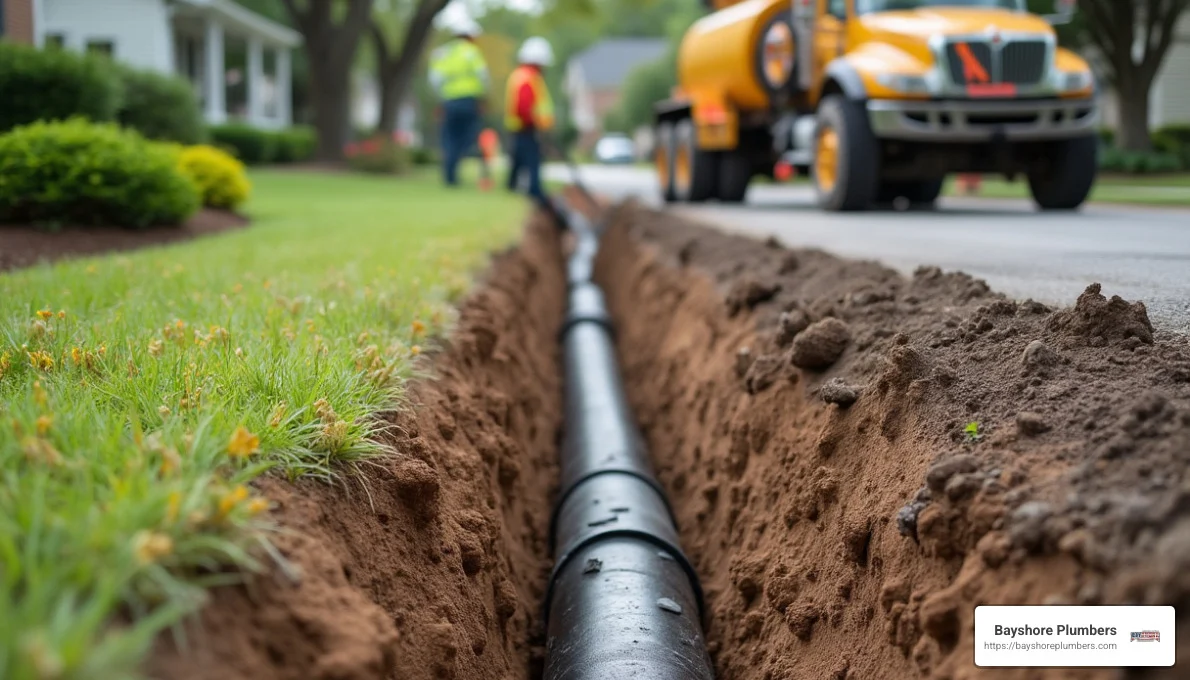
Sewer pipe relining is a method that offers trenchless technology for fixing your old and damaged pipes without digging up your yard or tearing apart your walls. This no-dig solution saves time, money, and the beauty of your property.
- Trenchless Technology: Minimal digging means no mess in your yard.
- No Dig Solutions: Protects your landscaping and reduces repair costs.
- Modern Plumbing Innovations: Improves efficiency and durability of your plumbing system.
In modern plumbing, sewer pipe relining is an innovative solution addressing the challenges of maintaining efficient pipes in aging homes and infrastructures. This technique is a game-changer, using advanced technology to repair pipelines from the inside out. Homeowners like Sarah, a small business owner in Redwood City, can benefit immensely from this approach, as it avoids the chaos and expense traditionally associated with pipe repairs. Instead of disrupting your daily life, these modern methods offer a seamless and efficient way to restore your plumbing.
Understanding Sewer Pipe Relining
Sewer pipe relining is an advanced trenchless process that repairs damaged pipes without the need for destructive digging. This method is ideal for those who want to avoid the hassle and mess of traditional pipe repair. Let’s explore how this process works and why it’s beneficial.
The Relining Process
The process begins with a sewer camera inspection. This step is crucial as it helps identify the exact location and extent of the pipe damage. Using high-tech cameras, experts can pinpoint cracks and leaks, providing a clear picture of what needs fixing.
Next, the existing pipes are thoroughly cleaned. This step involves removing debris and blockages to ensure a smooth surface for the new lining. High-pressure water jets or robotic cutters are often used to achieve this.
Once the pipes are clean, the epoxy impregnation process begins. A flexible felt tube, saturated with epoxy resin, is inserted into the damaged pipe. This tube is then inverted, so the resin lines the inner walls of the existing pipe.
Curing methods come into play here. The resin-soaked liner is hardened using hot air, steam, or UV light, forming a durable new pipe within the old one. This curing process solidifies the new lining, ensuring it stays in place for years to come.
Benefits of Sewer Pipe Relining
The benefits of this method are numerous:
-
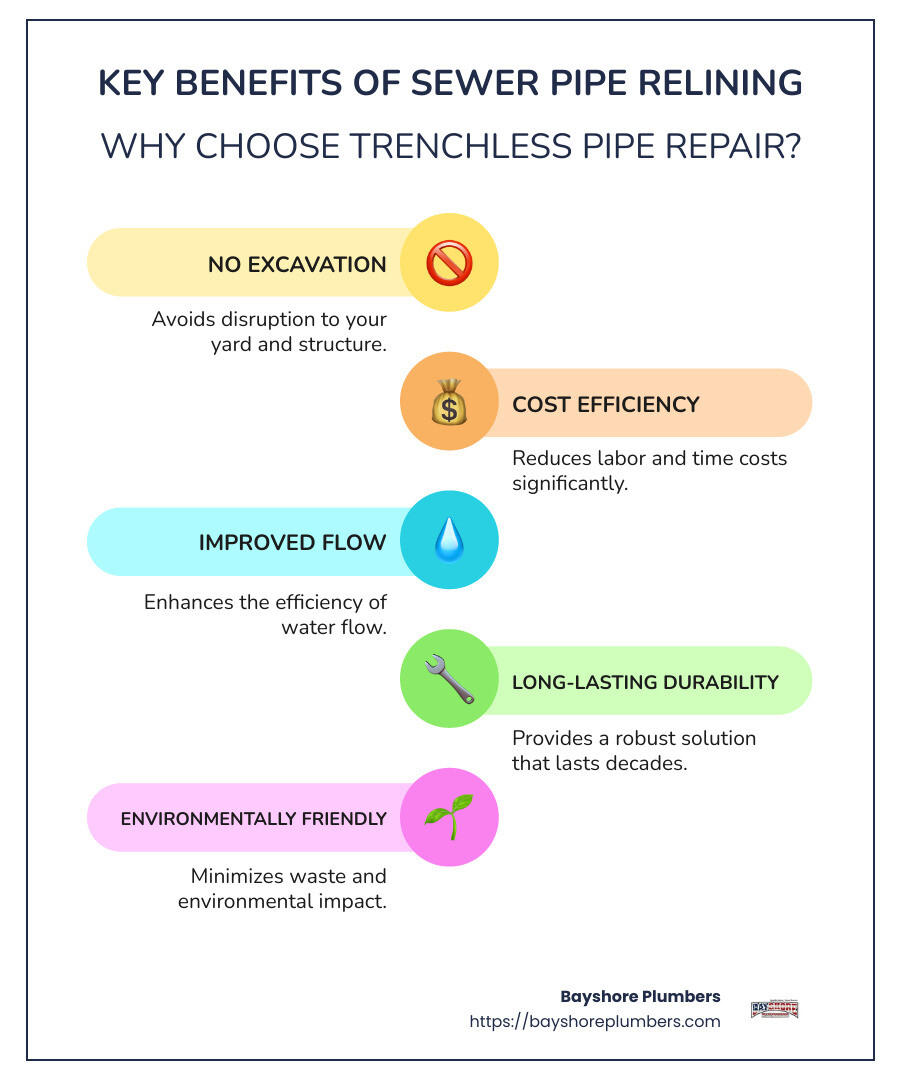
No Excavation: Traditional pipe repair methods often require digging up large sections of your property. With sewer pipe relining, there’s no need for such disruption. Your garden, driveway, and sidewalks remain untouched.
-
Improved Flow: The new lining provides a smooth surface, which can improve the flow of water and waste through the pipes. This means fewer blockages and better efficiency.
-
Long-Lasting Solution: Once cured, the new pipe lining is incredibly durable. It can last for decades, providing a reliable solution to your plumbing issues. In fact, relined pipes can have a lifespan of up to 50 years.
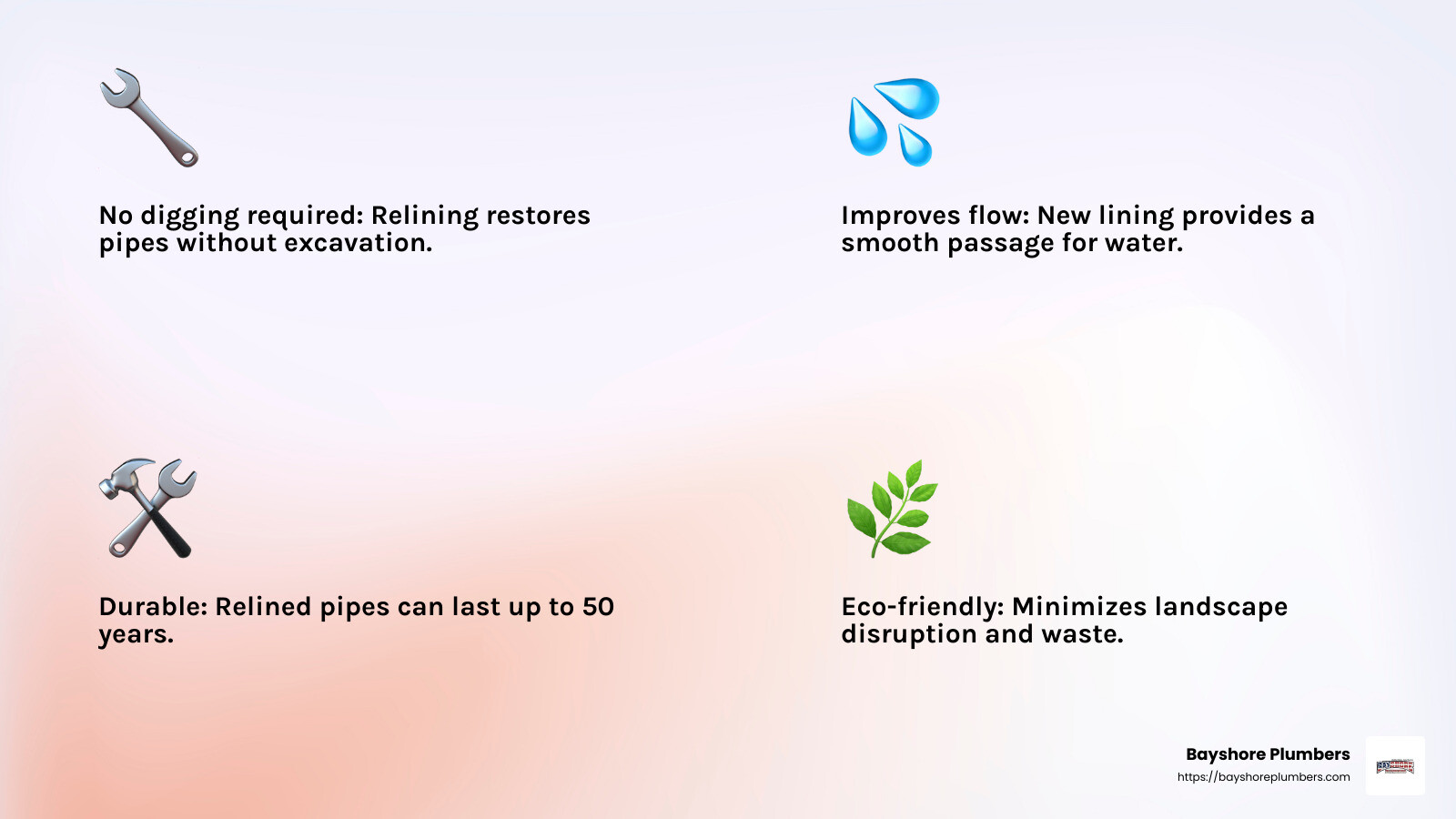
With sewer pipe relining, you get a modern, efficient, and minimally invasive solution to your plumbing problems. This method not only saves you time and money but also preserves the integrity of your property. It’s a win-win for homeowners looking to upgrade their plumbing without the headache of traditional repairs.
Next, we will explore how different relining techniques compare and what makes each unique.
Comparing Relining Techniques
When it comes to sewer pipe relining, there are several techniques to consider. Each has its unique benefits and applications, making it important to understand the differences. Here, we’ll explore three popular methods: Cured-In-Place Pipe (CIPP), Sliplining, and Pipe Bursting.
Cured-In-Place Pipe (CIPP)
CIPP is a widely used method in the trenchless technology space. It involves inserting a resin-soaked liner into the existing pipe. This liner is then expanded, pressing it against the pipe walls.
The curing process is crucial in CIPP. There are different ways to cure the resin, including:
- Steam Curing: Hot steam is used to harden the resin, forming a solid pipe within the old one.
- UV Curing: Ultraviolet light is another option, offering a quicker curing time with precise control over the process.
This method is highly effective for repairing pipes with minimal disruption, as it requires only small access points at either end of the pipe.
Sliplining and Pipe Bursting
Both Sliplining and Pipe Bursting are techniques that involve inserting new pipes, but they do so in different ways.
Sliplining involves inserting a smaller carrier pipe into the existing pipeline. This method is straightforward and can be cost-effective, but it does reduce the diameter of the pipe, which might affect flow capacity.
Pipe Bursting, on the other hand, is a bit more aggressive. This technique involves breaking the old pipe apart while simultaneously pulling a new pipe into its place. It’s particularly useful for completely replacing severely damaged pipes without digging up large areas.
Both methods offer minimal disruption to the surrounding environment, making them appealing options for urban areas where excavation can be challenging.
In summary, each relining technique has its place in modern plumbing solutions. CIPP is perfect for maintaining pipe diameter while offering a durable fix. Sliplining is simple and less expensive, though it reduces pipe size. Pipe Bursting is ideal for complete replacement without surface disruption. Understanding these options helps homeowners and professionals choose the best method for their specific needs.
Cost Considerations
When considering sewer pipe relining, understanding the cost factors is crucial. The overall expense can vary significantly based on several key elements.
Factors Affecting Cost
1. Cost per Metre and Base Cost:
The cost of relining is often broken down into a base cost plus a per metre charge. For residential projects, the base cost might start at around $2500. From there, the cost can increase depending on the length of the pipe being lined, typically ranging from £70 to £130 per metre.
2. Economies of Scale:
In larger projects, particularly those involving long, straight runs of pipe, economies of scale can come into play. This means the cost per metre may decrease as the total length of the pipe increases. For example, lining thousands of feet of pipe in a straightforward layout can significantly reduce the per-foot cost.
3. Pipe Length and Diameter:
The length and diameter of the pipe are primary cost drivers. Longer pipes require more materials and labor, while larger diameters need more substantial linings to ensure durability.
4. Network Complexity:
The complexity of the pipe network is another critical factor. Pipes with multiple bends, diameter changes, and numerous fittings can increase the difficulty and time required for relining. This complexity often results in higher costs due to the additional labor and expertise needed.
5. Depth of Pipe:
Pipes buried deep underground may require more effort to access, even with trenchless methods. The depth can affect the cost due to the need for specialized equipment and techniques to handle the structural load safely.
In summary, while sewer pipe relining is typically less expensive and disruptive than full pipe replacement, the costs can vary based on these factors. Understanding these elements can help homeowners and businesses budget more effectively for their pipe repair needs.
Frequently Asked Questions about Sewer Pipe Relining
Is sewer pipe relining worth it?
Absolutely! Sewer pipe relining offers a modern, efficient solution that extends the life of existing pipes. With a potential lifespan of up to 35 years, relined pipes can be even stronger than traditional ones. This longevity makes it a cost-effective choice for homeowners looking to avoid the disruption and expense of full pipe replacement.
How much does it cost to reline a drain pipe?
The cost of relining a drain pipe can vary based on several factors, such as pipe length and complexity. Typically, for residential projects, prices range from $2,500 to $5,500. On a per metre basis, expect to pay between £70 and £130. Larger projects might benefit from economies of scale, potentially lowering the per-metre cost.
What are the disadvantages of pipe relining?
While sewer pipe relining is an excellent solution for many, it’s not without its limitations. One potential drawback is that it may not be suitable for improperly installed pipes. Additionally, the relining process can slightly reduce the diameter of the pipe. However, this reduction is usually minimal and doesn’t significantly impact the pipe’s capacity or flow rate.
By weighing these factors, homeowners can decide if sewer pipe relining is the right choice for their specific needs.
Conclusion
At Bayshore Plumbers, we’re proud to offer premium plumbing services with a focus on innovative solutions like sewer pipe relining. This modern approach allows us to address plumbing issues efficiently and effectively, minimizing disruption to your property and daily life. Our expertise in trenchless technology ensures that you receive a long-lasting solution without the hassle of traditional excavation methods.
As a veteran-owned business, we bring a unique perspective and commitment to excellence in all that we do. Our status as a Disabled Veteran Business Enterprise not only reflects our dedication to supporting veterans but also offers our clients potential benefits, such as prioritization in federal contracts and tax incentives when partnering with us. This commitment to service and quality resonates throughout our operations, providing our customers with reliable, top-tier plumbing solutions.
Whether you’re dealing with aging pipes, planning a major renovation, or simply need routine maintenance, Bayshore Plumbers is here to help. Our comprehensive range of services, from Perma-Liner Repairs to Hydro Flushing and beyond, ensures that we can meet all your plumbing needs with expertise and care.
For more information on our services and how we can assist you, please visit our services page.
Experience the Bayshore Plumbers difference—where advanced technology meets exceptional service.