Sewer System Repair: Top 3 Trusted Tips 2025
Sewer system repair is an essential concern for homeowners and business owners, especially in older properties where aging infrastructure often leads to problems. If you’re experiencing slow drains, unpleasant odors, or inexplicable wet spots in your yard, it’s crucial to address these issues promptly to prevent further complications. Here are some key points about sewer system repair:
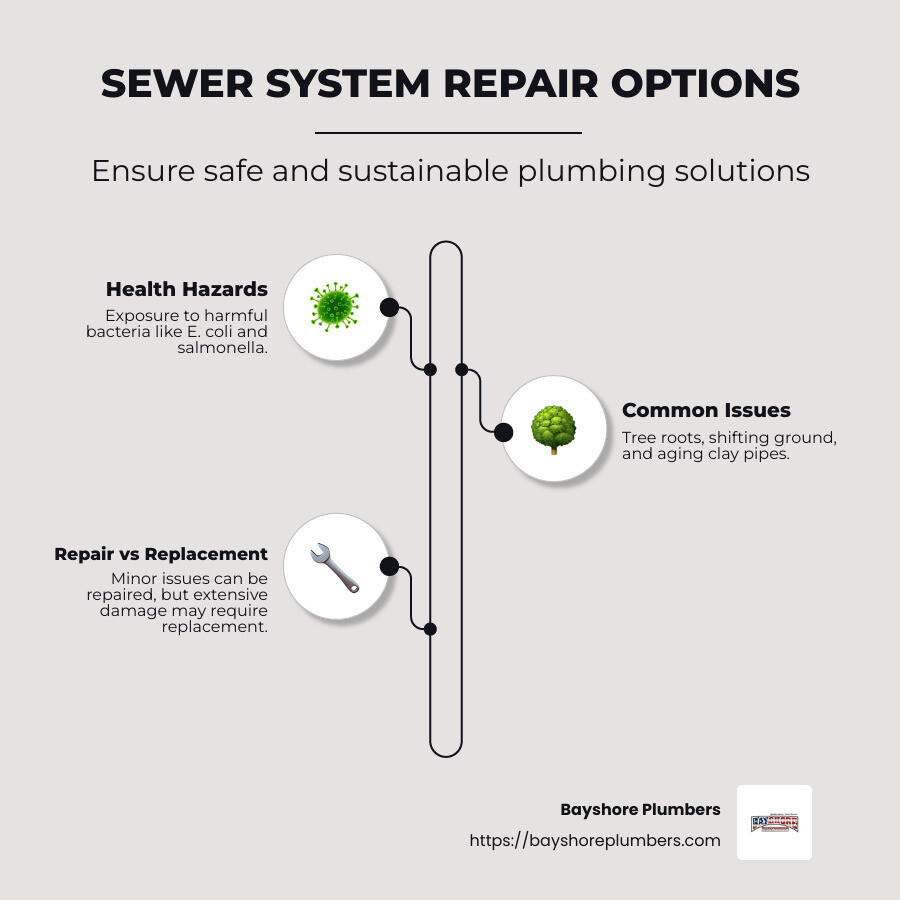
- Health Hazards: Untreated sewer leaks can lead to serious health risks, such as exposure to harmful bacteria like E. coli and salmonella.
- Common Issues: Problems may arise from tree roots, shifting ground, or even older clay pipes crumbling under pressure.
- Repair vs Replacement: Minor issues might be resolved with repairs, but more extensive damage often necessitates a full replacement to ensure long-lasting solutions.
The decision to repair or replace sewer lines can be daunting. It involves assessing the root cause of the problem and the extent of the damage. While repairs can often fix small cracks or breaks, significant issues like severe root intrusion or collapse may require replacement for a complete resolution.
Choosing the right method is crucial not only to fix current problems but also to prevent future ones. Whether it’s through traditional excavation or modern trenchless techniques, the goal is to ensure your property’s plumbing is safe, efficient, and sustainable.
Understanding Sewer System Repair
Sewer system repair is vital for maintaining a healthy and functional home or business environment. When sewer pipes malfunction, they can pose serious health risks and cause significant property damage if not addressed promptly.
Pipe Malfunctions
There are several common causes of sewer line malfunctions:
-
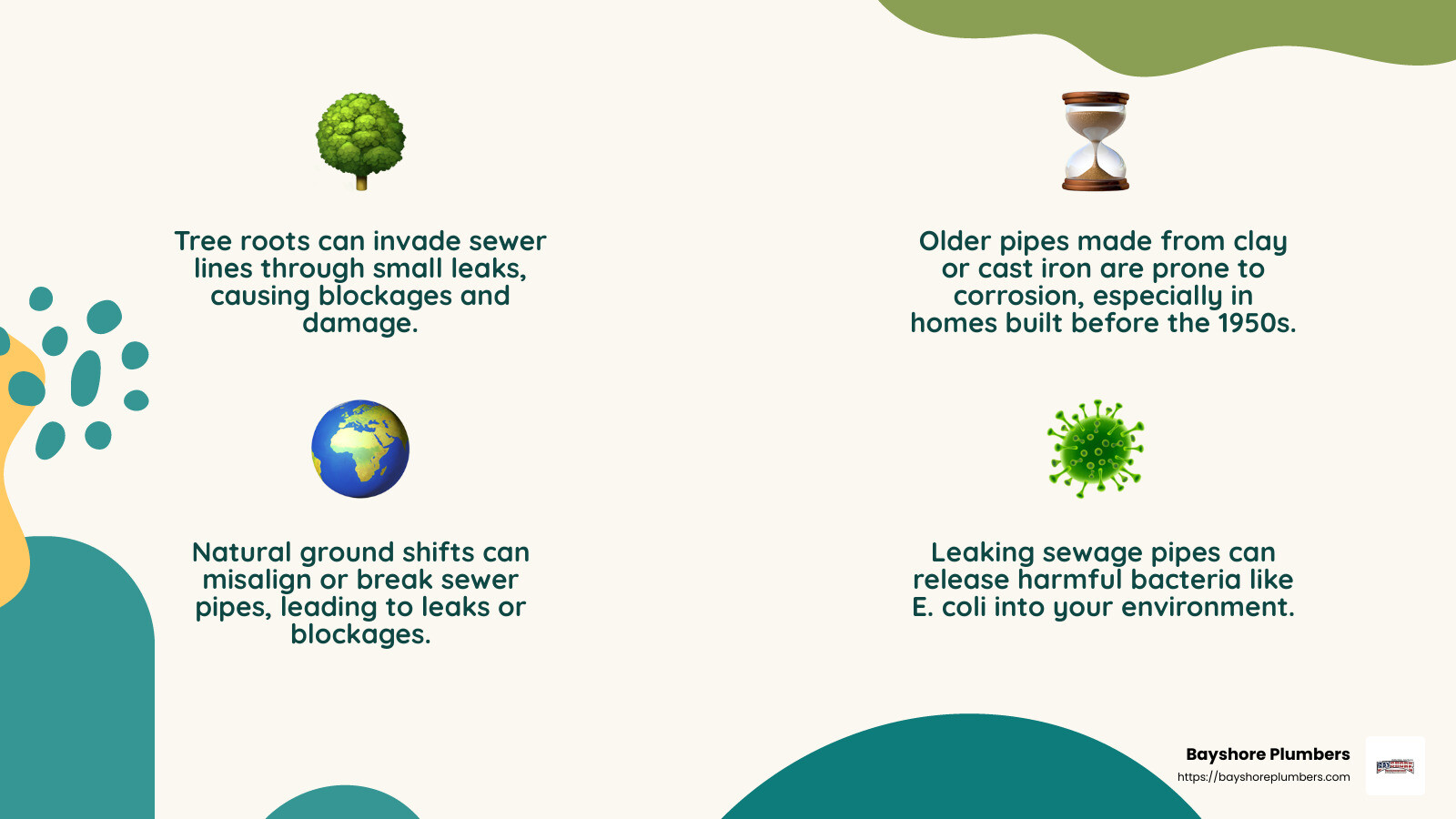
Tree Roots: One of the biggest culprits. Tree roots naturally seek out water sources, and even a small leak in your sewer line can attract them. Once they invade, they can cause blockages and even break the pipes.
-
Aging Infrastructure: Older pipes, especially those made from clay or cast iron, are prone to corrosion and breakage. This is particularly true for homes built before the 1950s.
-
Ground Movement: Natural ground shifts or settling can lead to misaligned or broken pipes, resulting in leaks or blockages.
Health Risks
Ignoring sewer issues can lead to severe health hazards:
-
Exposure to Harmful Bacteria: Leaking sewage lines can release dangerous bacteria such as E. coli and salmonella into your home environment.
-
Mold Growth: Water damage from leaks can create the perfect environment for mold, which can cause respiratory issues and allergies.
Repair or Replacement?
The decision between repairing or replacing sewer lines often depends on the severity of the damage. Minor issues, like small cracks, might be resolved with simple repairs. However, substantial damage, such as from extensive root intrusion or pipe collapse, often requires a full replacement for a long-term solution.
By choosing the right sewer system repair method, you not only fix the current problem but also help prevent future issues. Whether opting for traditional excavation or innovative trenchless techniques, the goal is to ensure your plumbing is safe, efficient, and reliable.
Common Causes of Sewer Line Damage
Sewer line damage can be a homeowner’s nightmare, but understanding its common causes helps in preventing costly repairs. Let’s explore what typically goes wrong with sewer lines.
Tree Roots
Tree roots are a notorious enemy of sewer lines. They naturally seek out moisture, and even the tiniest leak in a pipe can attract them. Once they find a way in, they grow and expand, causing blockages or even breaking the pipe. This is especially problematic for older homes with clay pipes, which are more susceptible to root intrusion.
Aging Pipes
Older pipes, particularly those made from clay or cast iron, can deteriorate over time. Homes built before 1950 are at higher risk because the materials used back then are prone to corrosion and breakage. As pipes age, they become more fragile and prone to cracking or collapsing.
Ground Movement
Natural ground shifts or settling can also lead to sewer line damage. This is especially common in areas with heavy rainfall or frequent freeze-thaw cycles. The movement can misalign pipes, causing leaks or blockages that require immediate attention.
Grease Buildup
Pouring cooking grease down the drain might seem harmless, but it can lead to serious issues. Grease solidifies as it cools, building up in pipes and creating stubborn blockages. Over time, this can cause sewage backups, which are both unpleasant and damaging.
Severe Weather
Heavy rain or flooding can overwhelm sewer systems, leading to backups or pipe damage. Excess water pressure can crack pipes, which then need urgent repair to prevent further issues. Flooded areas also make pipes more vulnerable to shifting, exacerbating existing weaknesses.
Understanding these common causes can help you take preventive measures to protect your sewer system. Regular maintenance and inspections can catch issues early, saving you from expensive repairs down the line.
Signs You Need Sewer Repair
Knowing the signs of sewer trouble early can save you from bigger headaches later. Here’s what to watch for if you suspect a problem with your sewer system.
Sewage Smells
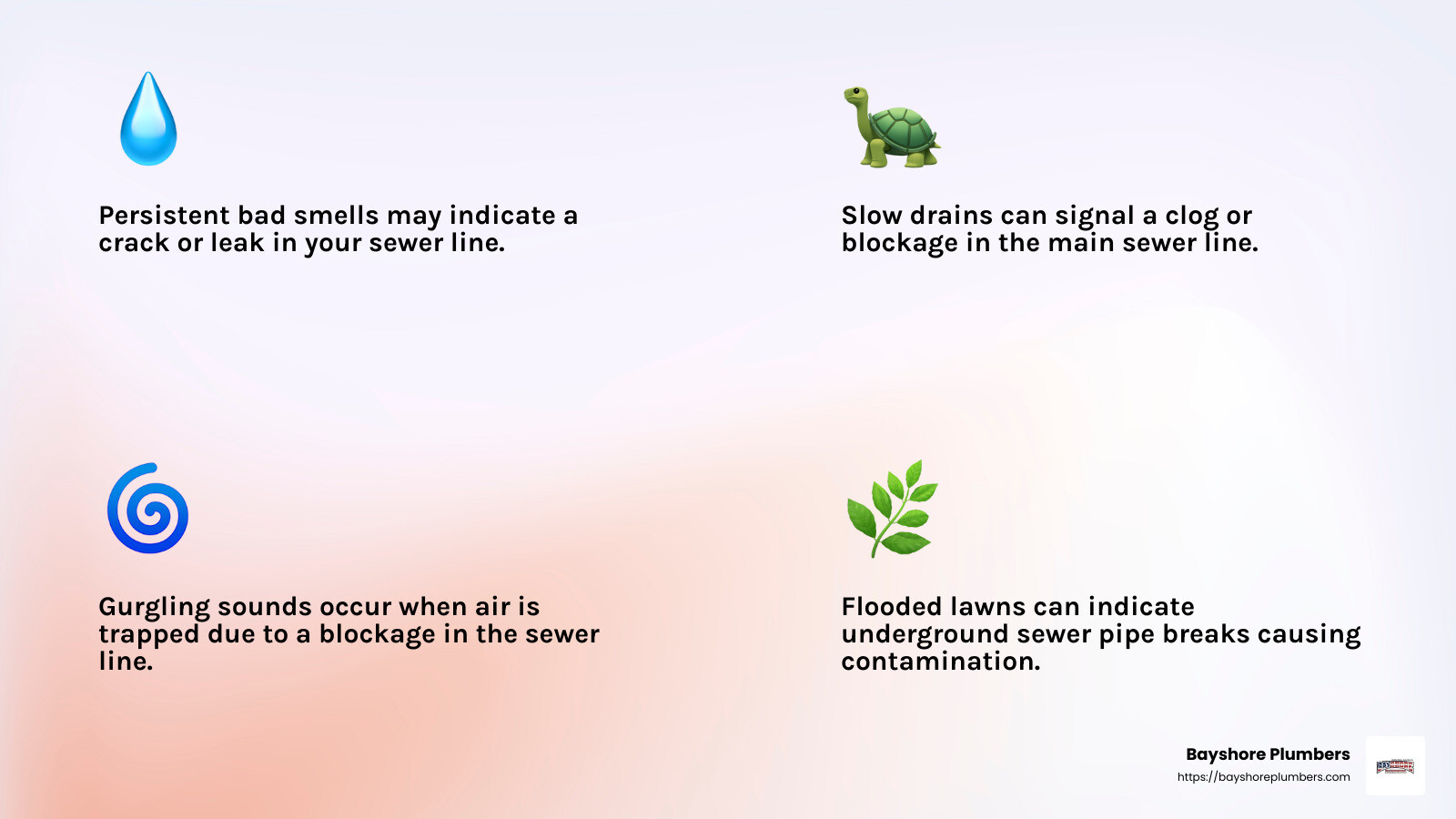
If there’s a persistent bad odor around your home or yard, it might be a hint of a sewer issue. Sewer gas, which includes hydrogen sulfide, has a distinct, rotten-egg smell. If you notice this, it’s crucial to act fast. The smell might mean there’s a crack or leak in your sewer line, allowing gas to escape.
Slow Drains
Are your sinks, showers, or tubs draining slower than usual? This can signal a clog or blockage in your sewer line. While a single slow drain might just be a local issue, multiple slow drains throughout your home often point to a problem with the main sewer line.
Gurgling Sounds
Strange noises coming from your drains, especially gurgling, can be a red flag. Gurgling happens when air is trapped in the pipes. This can occur when there’s a blockage in the sewer line, causing air to bubble back up through the drains.
Flooded Lawn
A soggy lawn or patches of grass that are greener than the rest can indicate a sewer leak. If a sewer pipe breaks underground, wastewater can seep into the soil, causing the ground to become saturated. This not only creates a mess but can also pose health risks due to contamination.
Sewer Odor Indoors
If you notice a sewer-like smell inside your home, it might mean there’s an issue with your plumbing vents or a broken sewer line. This odor can be unpleasant and harmful, so it’s important to address it quickly.
Recognizing these signs you need sewer repair can help you take swift action, preventing more severe damage. If you notice any of these issues, it’s wise to contact a professional plumber to assess and address the problem before it escalates.
Sewer Repair Methods
When it comes to sewer system repair, there are several methods available, each with its own benefits and challenges. Let’s explore the four main techniques: pipe relining, pipe bursting, trenchless repair, and traditional excavation.
Pipe Relining
Pipe relining is a smart, non-invasive method to fix minor pipe damage. This technique involves inserting an inflatable tube coated with epoxy into the damaged pipe. Once in place, the tube is inflated, pressing the epoxy against the pipe walls. As the epoxy cures and hardens, it forms a new pipe within the old one. This method is quick, cost-effective, and requires minimal digging, making it perfect for small cracks or leaks.
Pipe Bursting
If the damage is too severe for pipe relining, pipe bursting might be the answer. This method involves breaking the old, damaged pipe while simultaneously pulling a new pipe into its place. A cone-shaped bursting head is used to fracture the existing pipe and push it aside, making room for the new pipe. Although more invasive than relining, pipe bursting is still less disruptive than traditional methods and is ideal for replacing old pipes with new, durable ones.
Trenchless Repair
Trenchless repair is a broad term that includes both pipe relining and pipe bursting. The main advantage of trenchless repair is that it requires little to no digging, preserving your lawn and landscaping. According to CityWide Sewer & Drain, trenchless methods can address issues like blocked pipes, cracks from earth movement, and damage from freezing. Since repair time is usually less than a day, this approach can save both time and money.
Traditional Excavation
For pipes that are beyond repair or when trenchless methods aren’t suitable, traditional excavation is necessary. This method involves digging a trench to expose the damaged pipe, which can be time-consuming and costly. While excavation is more invasive, it’s sometimes the only option for severely damaged sewer lines. It’s important to weigh the impact on your property and the potential costs before choosing this route.
Choosing the right sewer repair method depends on several factors, such as the severity of the damage, cost considerations, and the impact on your property. At Bayshore Plumbers, our experts can help you determine the best solution for your specific needs, ensuring efficient and long-lasting results.
Choosing the Right Repair Method
Choosing the right sewer repair method is crucial. It can save you time, money, and prevent unnecessary disruptions to your property. Here’s how to make an informed decision:
Cost Considerations
The cost of sewer repair varies widely depending on the method. Pipe relining is usually the most cost-effective option, especially for minor damage. It requires minimal digging, which reduces labor costs. Pipe bursting is more expensive but necessary for severely damaged pipes. While traditional excavation tends to be the most costly due to the extensive labor and restoration required.
Property Impact
One of the biggest concerns for homeowners is the impact on their property. Trenchless repair methods, like pipe relining and bursting, are less invasive. They require little to no digging, preserving your landscaping. This is a major advantage, especially for properties with elaborate gardens or hardscapes. On the other hand, traditional excavation involves digging large trenches, which can disrupt your yard and take longer to restore.
Repair Longevity
The longevity of the repair is another key factor. Pipe relining creates a new pipe within the old one, which can last for decades. Pipe bursting replaces the old pipe entirely with a new, durable one, offering a long-term solution. While traditional excavation also provides a lasting fix, the invasive nature and cost make it a less favorable choice unless absolutely necessary.
Bayshore Plumbers Expertise
At Bayshore Plumbers, we understand the complexities of choosing the right repair method. Our team is experienced in all aspects of sewer system repair. We use cutting-edge technology to assess the damage and recommend the best solution for your needs. Whether you’re in Redwood City, San Mateo County, or Palo Alto, our local experts are ready to help you make the best decision for your home.
By considering cost, property impact, and repair longevity, you can choose the right method for your sewer system repair needs. Trust Bayshore Plumbers to provide expert advice and quality service, ensuring your plumbing system is in top shape.
Next, we’ll address some frequently asked questions about sewer system repair.
Frequently Asked Questions about Sewer System Repair
How much does it cost to fix a backed-up sewer line?
The cost to fix a backed-up sewer line can vary significantly. On average, homeowners might pay anywhere from $1,000 to $4,000. Factors like the severity of the blockage, the method used, and local labor rates can all influence the final price. Investing in a quality repair can prevent future issues, saving you money in the long run.
Can sewer lines be repaired without excavation?
Yes, trenchless repair methods make it possible to fix sewer lines without major excavation. Techniques like pipe relining and pipe bursting are popular because they require minimal digging. This means less disruption to your property and faster repair times. These methods are not only efficient but also help preserve your landscaping, driveways, and walkways.
What is the life expectancy of a repaired sewer line?
When done correctly, a repaired sewer line can last a long time. Pipe relining can extend the life of your pipes by 50 years or more. Similarly, pipe bursting replaces old pipes with new, durable ones that are designed to last for decades. To ensure longevity, regular maintenance and avoiding harmful practices, like flushing non-degradable items, are crucial.
By understanding the costs, benefits of trenchless methods, and the potential lifespan of repairs, homeowners can make informed decisions about their sewer system repair needs. For any questions or to schedule a consultation, contact Bayshore Plumbers. Our team is ready to assist you with expert advice and reliable service.
Conclusion
When it comes to sewer system repair, choosing the right service provider is crucial. At Bayshore Plumbers, we offer expert services custom to meet the unique needs of both residential and commercial properties. Our team specializes in a range of solutions, including trenchless repair methods like pipe relining and pipe bursting, ensuring minimal disruption to your property.
As a veteran-owned business, Bayshore Plumbers is committed to supporting our community and providing exceptional service. Our status as a Disabled Veteran Business Enterprise not only reflects our dedication to serving those who have served but also offers benefits like tax incentives and priority for federal contracts. This commitment to excellence is evident in every project we undertake.
We understand that plumbing issues can arise at any time, which is why we offer 24/7 availability to ensure your peace of mind. Whether it’s an emergency repair or routine maintenance, our skilled professionals are ready to assist you day or night.
For more information about our services or to schedule a consultation, visit our service page. Trust Bayshore Plumbers for all your sewer repair needs—where expertise meets reliability.